Reducing food waste in the company: figures, causes and solutions

Food waste in the company in Switzerland: the scale of the phenomenon, its causes in workplace catering, and concrete solutions to reduce it. The guide, by Qibi.
food-wastecsrsustainabilitycompany-cateringanti-waste
The Qibi Team
Reducing food waste in the company: figures, causes and solutions

Food waste in the company refers to all the foodstuffs produced, bought or prepared for workplace catering, but never consumed. In Switzerland, where food waste represents several million tonnes per year, collective catering has a real role to play. Here is the scale of the phenomenon, its causes, and the concrete levers to reduce it.

The scale of food waste in Switzerland

Food waste is a major issue in Switzerland. According to the estimates of the Federal Office for the Environment (FOEN) and the work relayed by foodwaste.ch, the country wastes on the order of several million tonnes of foodstuffs each year, spread all along the chain, from the fields to the plate.

Catering, including collective catering in the company, is one of the links concerned, alongside households, retail and production.

The precise figures evolve according to studies and methodologies. We cite here orders of magnitude drawn from Swiss public sources. For CSR reporting, it is recommended to refer to the most recent official data (FOEN, foodwaste.ch).

Beyond the figure, the challenge is threefold: environmental (emissions linked to the production of lost food), economic (foodstuffs paid for and then thrown away) and reputational (growing expectations of employees and stakeholders regarding sustainability).

Why do we waste in company catering?

Several structural causes explain the waste in workplace catering.

  • The difficulty of forecasting demand. A canteen or a catering service must anticipate the number of meals. Forecasting too much generates unsold items, forecasting too little generates frustration.
  • The freshness constraints. Fresh dishes have a short shelf life. What is not sold during the day often ends up in the bin.
  • The lack of visibility over stocks. Without precise tracking of what is actually consumed, it is difficult to adjust the offer.
  • The standardized portions. Single portions, not adapted to real appetite, increase leftovers.

The levers to reduce waste

Reducing food waste in the company happens through a combination of measures.

1. Better adjust the offer to demand

The first lever is data. Tracking precisely what is consumed, day by day, makes it possible to adjust the quantities and avoid overproduction. This is where connected solutions change the game.

2. Make use of unsold items

Rather than throwing away, one can redistribute:

  • Anti-waste platforms like Too Good To Go make it possible to sell off unsold items at a reduced price at the end of the day.
  • Donations to associations, schools or food banks give the foodstuffs a second life.
  • End-of-day promotions encourage consuming what remains before closing.

3. Rethink packaging

The question of packaging is linked but distinct. Some players bet on the reusable container (glass), others on lighter packaging to reduce the footprint of transport. Both approaches have their logic, depending on whether the priority is zero packaging waste or the lightening of the carbon footprint of deliveries.

4. Raise awareness among teams

Finally, awareness matters. Displaying the impact, encouraging good practices and involving employees strengthens the results sustainably.

The role of the connected fridge in the fight against waste

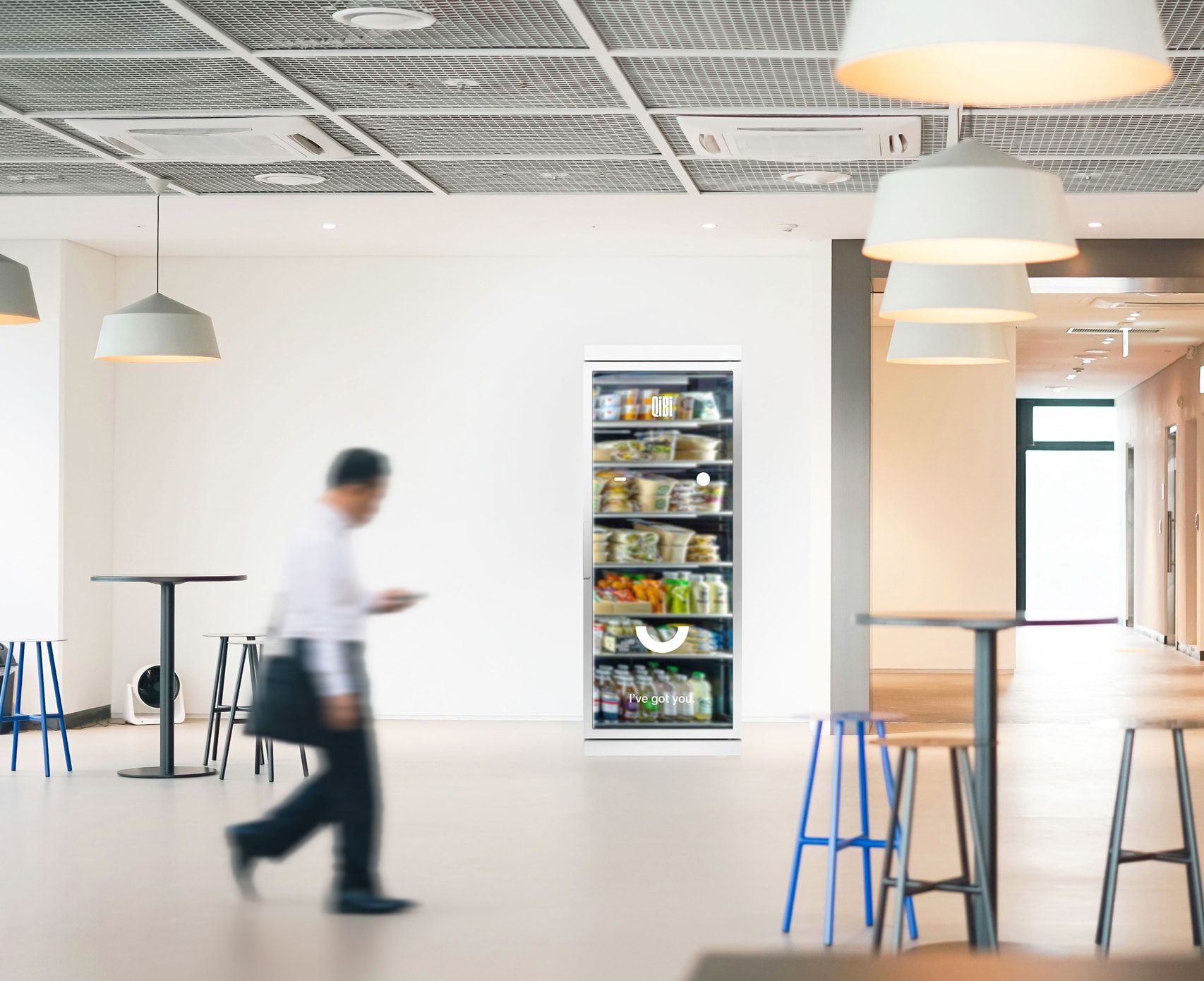
The connected fridge acts directly on the first cause of waste: the lack of visibility and adjustment.

  • Real-time stock tracking. The manager sees remotely what remains in each fridge, and the restocking is driven by the site's actual consumption, not by an estimate.
  • An offer adjusted site by site. The quantities adapt to what the teams really consume, which reduces overproduction.
  • The use of unsold items. Depending on the providers, products close to their date are offered at a reduced price via the app, redistributed to schools or associations, or sold off via platforms like Too Good To Go.

At Qibi, this logic is at the heart of the model: adjusted production, remote stock tracking and use of unsold items. To understand the complete functioning, see our connected fridge guide.

FAQ

What is the scale of food waste in Switzerland?

Switzerland wastes on the order of several million tonnes of foodstuffs per year, spread over the whole chain, from production to households. Collective catering is one of the links concerned. For precise figures, refer to the official sources (FOEN, foodwaste.ch).

Why do we waste in company catering?

Mainly because of the difficulty of forecasting demand, the short shelf life of fresh dishes, the lack of visibility over stocks and standardized portions.

How to reduce food waste at work?

By adjusting the offer to demand thanks to data, by making use of unsold items (donations, anti-waste platforms, promotions), by rethinking packaging and by raising awareness among teams.

Does a connected fridge help reduce waste?

Yes. Real-time stock tracking makes it possible to adjust the offer to actual consumption and to limit overproduction, and unsold items are made use of via reduced prices, donations or anti-waste platforms.

Does food waste concern CSR reporting?

More and more. CSR departments integrate catering into their assessments. Reducing waste has an environmental, economic and employer-brand impact.

Reducing waste while delighting your teams

Qibi installs connected fridges that adjust the offer to actual consumption and make use of unsold items, for fresh meals with less waste.

Request a Qibi tasting

To go further

Try Qibi for free

We install it, your teams try it, then you decide. No obligation.

Request a free trialRequest callback

Already trusted by teams across French-speaking Switzerland.

Read next

Reducing food waste in the company: figures, causes and solutions
CSR & sustainability

Reducing food waste in the company: figures, causes and solutions

Food waste in the company in Switzerland: the scale of the phenomenon, its causes in workplace catering, and concrete solutions to reduce it. The guide, by Qibi.
Read